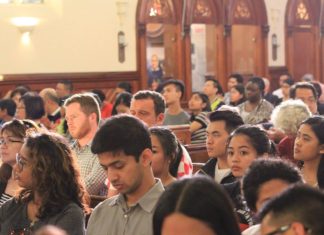
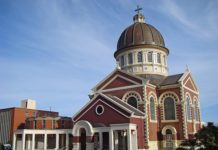


NEW PLYMOUTH Bishop Peter Cullinane of Palmerston North has received letters from north Taranaki Catholics protesting the end of Rite III Reconciliation with general absolution in their district. This form of the sacrament of Penance had taken place in St Josephs, New Plymouth, each Advent and Lent since 1997.
As NZ Catholic reported on April 5, Bishop Cullinane withdrew permission earlier this year.
The Church has three rites for the sacrament of Penance. Rite I is for a single penitent with individual confession, Rite II is a communal cele-bration with individual confession and Rite III is also a communal celebration with general absolution and no individual confession.
Canon law spells out limited conditions under which Rite III can be used, including danger of death. It also states the obligation on those aware of grave sin to go to Confession.
Pope John Paul II and his officials repeatedly called for a strict interpretation of the law, mindful of the process of healing and forgiveness.
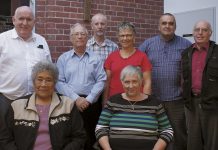
Announcing Bishop Cullinanes decision to parishioners in March, New Plymouth parish priest Fr Craig Butler and liturgy committee chairwoman Bev Raine invited written responses, which would be given to the bishop.
North Taranaki vicar forane Fr Tom Lawn told NZ Catholic the dismay of parishioners is powerfully portrayed in the letters, though five or six parishioners have told him of their support for the Church’s discipline.
Fr Lawn said attendance at pre-Easter Rite I and II Reconciliation was up by about 80 compared with last year, but overall reception of the sacrament was 400 to 500 lower than when all three rites were available. He said people made their choice in favour of Rite III a long time ago.
As a pastor, I have a responsibility to feed the Faith of the people entrusted to my pastoral care. When 400 or 500 persons are not nourished by a faith celebration because of the word of men, even learned or holy men, what should I do? he asked.
I believe I have to push our Church leadership and then live with the restlessness that comes when one is challenging the powerful and more learned and probably more faithful.
Fr Lawn said he is hearing Jesus saying strongly, feed my sheep.
Bishop Cullinane said he appreciates the letters and Fr Lawns position because of my very high regard for him as a pastor.
I am reflecting and consulting on this whole matter, and I want to be able to do so without pressure to make premature comment. I, too, want to enhance peoples experience of the sacraments, he said.