




WELLINGTON After taking medical advice, New Zealands Catholic bishops have issued a new set of restrictions for actions at Masses as the number of swine flu (Influenza H1N1) cases increases. Effective immediately, the bishops in a pastoral letter (see below) have asked that the following actions cease: Distribution of Communion from the chalice (including intinction), giving Communion on the tongue, and holding anointing Masses for the sick.
These are to stay in force until bishops conference president Bishop Denis Browne of Hamilton advises otherwise.
The bishops recommend that people who find taking Communion hosts in the hand difficult to accept, do so at this time, or make a spiritual communion which does not involve consuming the host.
The bishops also ask congregations to avoid bodily contact at liturgies, for example shaking hands at the Sign of Peace.
Priests and ministers of communion are urged to use an alcohol-based hand sanitiser before and after distributing communion.
Priests will be given instructions about saying Masses with more than one priest (concelebration).
The bishops, in the pastoral letter, state that authorities may be forced to ban public gatherings if the public health situation deteriorates severely. Should this happen, people would not gather for Masses and communion could not be received, but people should still pray.
Bishop Browne will advise if further restrictions are to be put in place.
The bishops first issued restrictions on actions at Masses when the swine flu virus first came to New Zealand in April, but these were lifted in May after advice from the Health Ministry.
The Catholic archdiocese of Melbourne has issued similar restrictions at Masses to New Zealands.
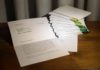
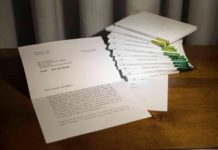
PASTORAL LETTER FROM THE NEW ZEALAND CATHOLIC BISHOPS CONFERENCE ON ACTIONS IN RELATION TO THE SPREAD OF INFLUENZA A (H1N1), 16 JUNE 2009
We Catholics have a deep love of the Mass. It is at the heart of our Catholic life, identity and practice.
When we gather in our churches each Sunday, we do so not as individuals, but as the Body of Christ, Gods holy Church. It is as the sisters and brothers of Christ that we attune our ear to the Word of God that gives us life. It is as the sisters and brothers of Christ that we draw near to the Altar of the Lord to be nourished by his Body and Blood. It is as the sisters and brothers of Christ that we go forth to live what we proclaim.
This is what we do as Catholics. This is who we are as Church.
Restrictions on certain practices during Mass
Because the Eucharist means so much to Catholics, bishops are charged by the Holy See with ensuring that the Church’s liturgy is celebrated with the utmost care. We take this responsibility very seriously. Only for a serious reason would we ever consider placing restrictions on certain practices during Mass.
As bishops we have a responsibility of care for both the members of the Church and for people in the wider community.